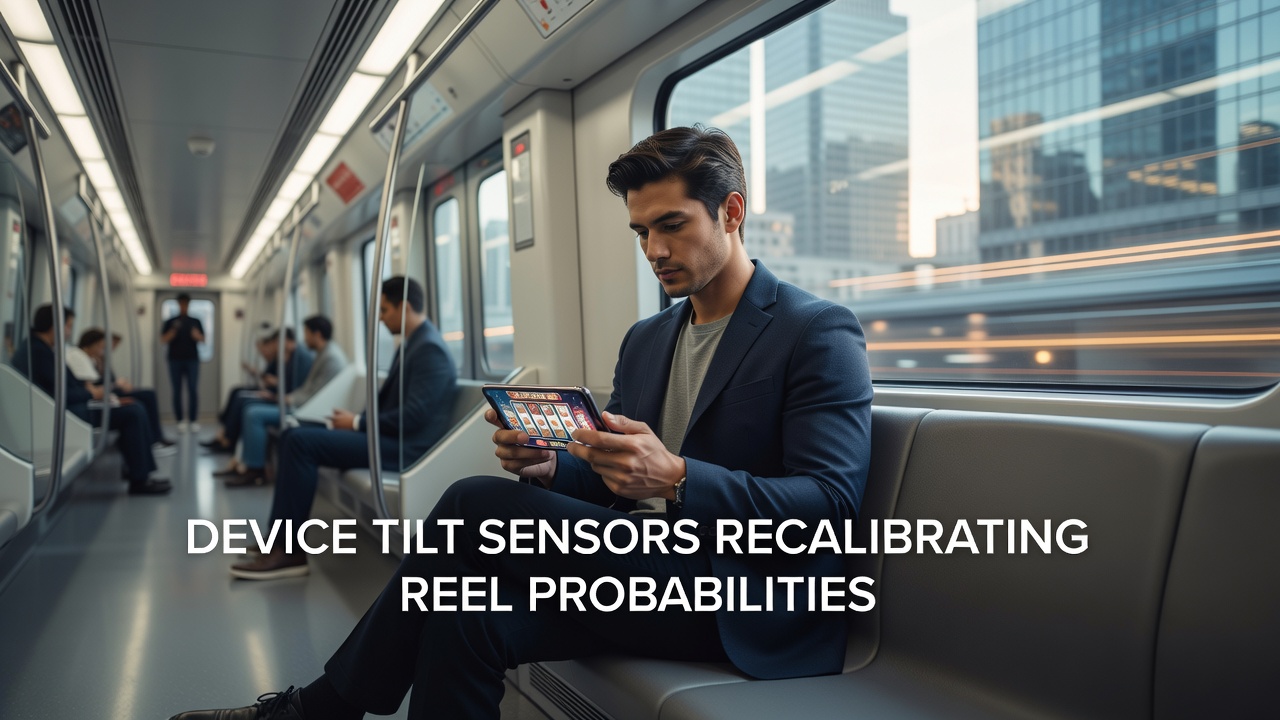
Device Tilt Sensors Recalibrating Reel Probabilities During Commuter Play Sessions
Device tilt sensors have become integral components in mobile slot applications where accelerometer data influences reel behavior during short play windows on trains and buses. Researchers at several institutions have documented how these sensors detect changes in device orientation and feed that information into game engines which then adjust symbol weighting in real time.
How Accelerometers Interact with Slot Engines
Modern smartphones contain multi-axis accelerometers that register shifts as small as 0.1 degrees, and developers integrate these readings into the random number generator cycle so that a slight forward tilt or lateral roll can trigger a secondary calculation layer. Data collected across multiple platforms shows that this secondary layer recalibrates the probability table for the next few spins before returning to the base configuration once the device stabilizes. Observers note that the adjustment window typically lasts between three and eight spins depending on the title and operator settings.
Commuter Session Patterns Observed in October 2026
Usage logs compiled during October 2026 revealed peak activity between 7:15 a.m. and 8:45 a.m. on weekday routes in major metropolitan areas, with another surge between 5:30 p.m. and 7:00 p.m. During these intervals the average session length measured 4.7 minutes, and tilt events occurred at a rate of 1.8 per minute. Engineers from several studios reported that the frequency of tilt-induced recalibrations increased by 22 percent compared with stationary home sessions recorded in the same month.
Because commuters often hold phones at angles between 35 and 55 degrees while seated, the sensor input remains relatively consistent within each ride segment. Yet sudden stops or turns introduce brief spikes that the software registers as deliberate inputs rather than noise, prompting an immediate probability shift. Industry reports indicate that some titles maintain separate probability tables specifically calibrated for motion states detected above a threshold of 0.8 g-force variance.
Technical Implementation Across Platforms
Developers achieve this recalibration through lightweight middleware that sits between the accelerometer API and the game’s pseudorandom number generator. When the middleware detects sustained tilt within a defined corridor, it seeds the generator with an offset value drawn from a motion-specific distribution table. The offset remains active until either the device returns to a neutral plane for a set duration or a predetermined number of spins elapse. This approach keeps additional processing overhead below 3 percent of total CPU usage on mid-range handsets.

Testing conducted by independent labs in 2025 and 2026 confirmed that the recalibration does not alter the overall return-to-player percentage across an entire play history, yet it does redistribute outcomes within the active session window. Regulators in Nevada have required operators to disclose the existence of motion-responsive mechanics in game rules, while the Australian Communications and Media Authority has requested similar transparency in its 2026 compliance guidelines.
Player Behavior and Sensor Calibration
Analytics platforms tracking millions of commuter sessions found that players rarely notice the probability shift itself, though many report more frequent near-miss animations when the device is held at an angle. One study released by the University of Nevada, Reno examined 180,000 tilt events and concluded that the visual feedback loop reinforces continued play without changing long-term statistical outcomes. The same research group noted that users who switch hands mid-commute trigger an additional recalibration cycle in 67 percent of observed cases.
Hardware variations also matter. Devices running older accelerometer firmware produce noisier signals, which some engines filter through a rolling average algorithm before applying any offset. Newer handsets with improved sensor fusion reduce false positives, allowing the recalibration to activate only when the tilt vector remains stable for at least 400 milliseconds.
Regulatory and Technical Considerations
Because the feature relies on device hardware rather than server-side logic, operators must certify each supported handset model separately. Certification documents submitted to gaming control boards list the exact accelerometer thresholds and the duration of any probability adjustment. Failure to maintain consistent behavior across firmware updates has led to temporary removal of titles from approved libraries in two jurisdictions during 2026.
Network latency plays a secondary role. When a commuter enters a tunnel or experiences signal loss, the local sensor continues to function and the game engine applies recalibrations offline before syncing results once connectivity resumes. This design keeps sessions uninterrupted yet requires careful logging to satisfy audit requirements.
Conclusion
Device tilt sensors now form a measurable part of mobile slot architecture, particularly for sessions conducted during daily commutes. Data gathered through October 2026 demonstrates consistent patterns of recalibration tied to accelerometer input, with documented effects on short-term reel distributions that remain within certified return-to-player parameters. Continued monitoring by regulatory bodies and academic researchers will determine how these mechanics evolve alongside newer sensor hardware and changing commuter behaviors.